50/125 vs 62.5/125 fiber: Choosing between these two multimode options starts with the network you already have. The numbers describe the fiber’s core and cladding diameters in micrometers; by themselves, they do not specify bandwidth, speed, or reach. In many legacy premises networks, 62.5/125 is associated with OM1, while 50/125 includes several grades, such as OM2, OM3, OM4, and OM5. The right choice depends on the complete link: fiber grade, transceivers, wavelength, distance, and the application’s requirements.
50/125 vs. 62.5/125: quick comparison
| Attribute | 50/125 multimode fiber | 62.5/125 multimode fiber |
|---|---|---|
| Core / cladding diameter | 50 µm / 125 µm | 62.5 µm / 125 µm |
| Common OM association | Used across multiple OM grades; check the cable marking and datasheet | Commonly associated with OM1 |
| What diameter tells you | Core and cladding size only | Core and cladding size only |
| What determines link performance | Grade, transceiver, wavelength, link design, and installed path | Grade, transceiver, wavelength, link design, and installed path |
| Best first step | Confirm the specified OM grade and active equipment | Identify the existing plant and validate upgrade compatibility |
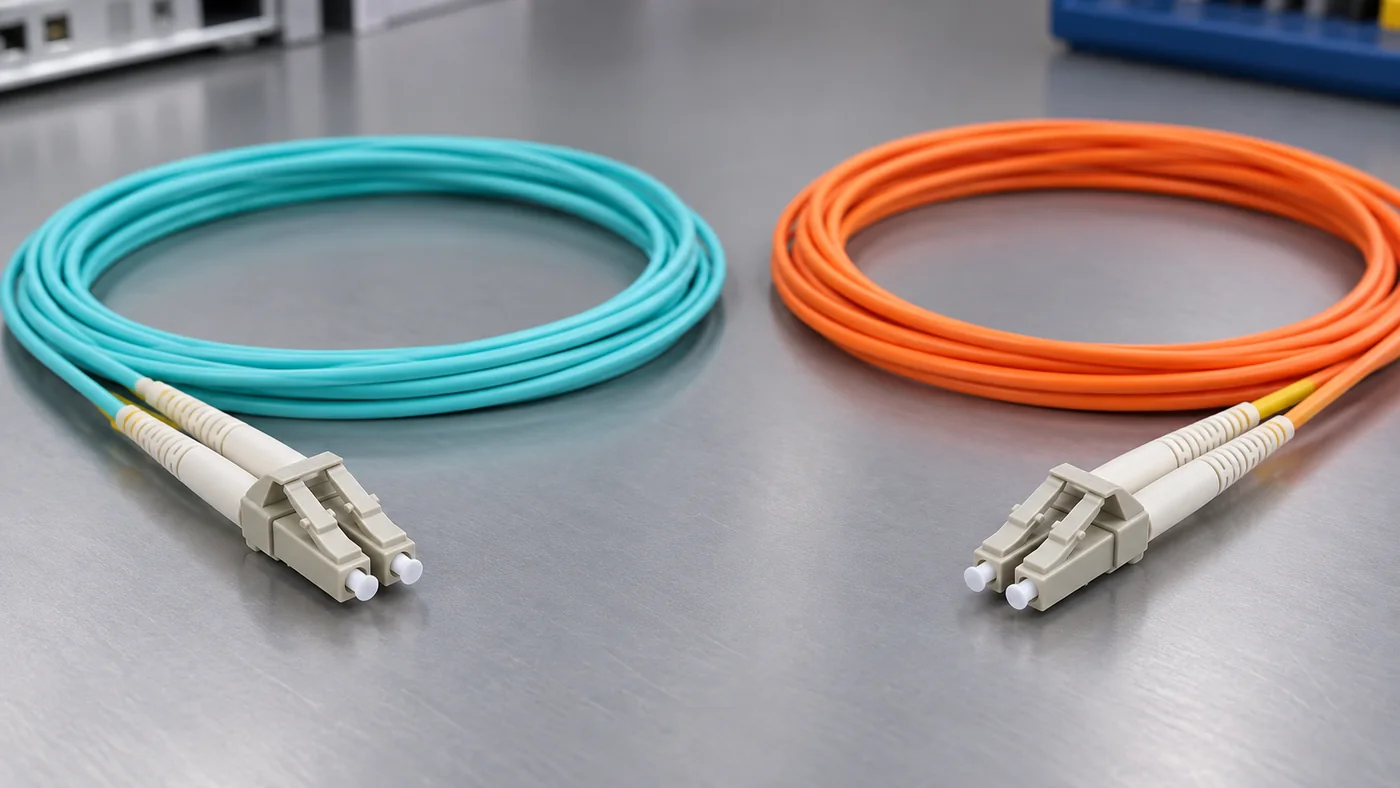
What do 50/125 and 62.5/125 mean?
The first number is the nominal diameter of the light-carrying glass core. The second is the nominal diameter of the surrounding glass cladding. Both examples have a 125 µm cladding, but their core diameters differ. Multimode fiber carries multiple light paths, and core size is only one part of how a fiber behaves in a link.
These dimensions are not a complete product specification. In particular, “50/125” does not tell you whether a cable is OM2, OM3, OM4, or OM5. Those categories have different performance classifications and application considerations. Read the cable jacket, product datasheet, and project specification rather than choosing from the diameter alone.
How are the OM grades different?
OM1 is commonly 62.5/125 multimode fiber. The 50/125 format is used for multiple grades, including OM2, OM3, OM4, and OM5. The grade indicates more about the fiber’s specified optical performance than the core diameter alone. For an existing installation, identify the exact grade before ordering replacement cable or planning a migration.
When comparing options, verify the standard and performance data required by the network design. Also confirm connector type, transceiver compatibility, wavelength, and the intended operating distance. A broad label such as “multimode” is not enough to establish that two components will work together for a particular application.
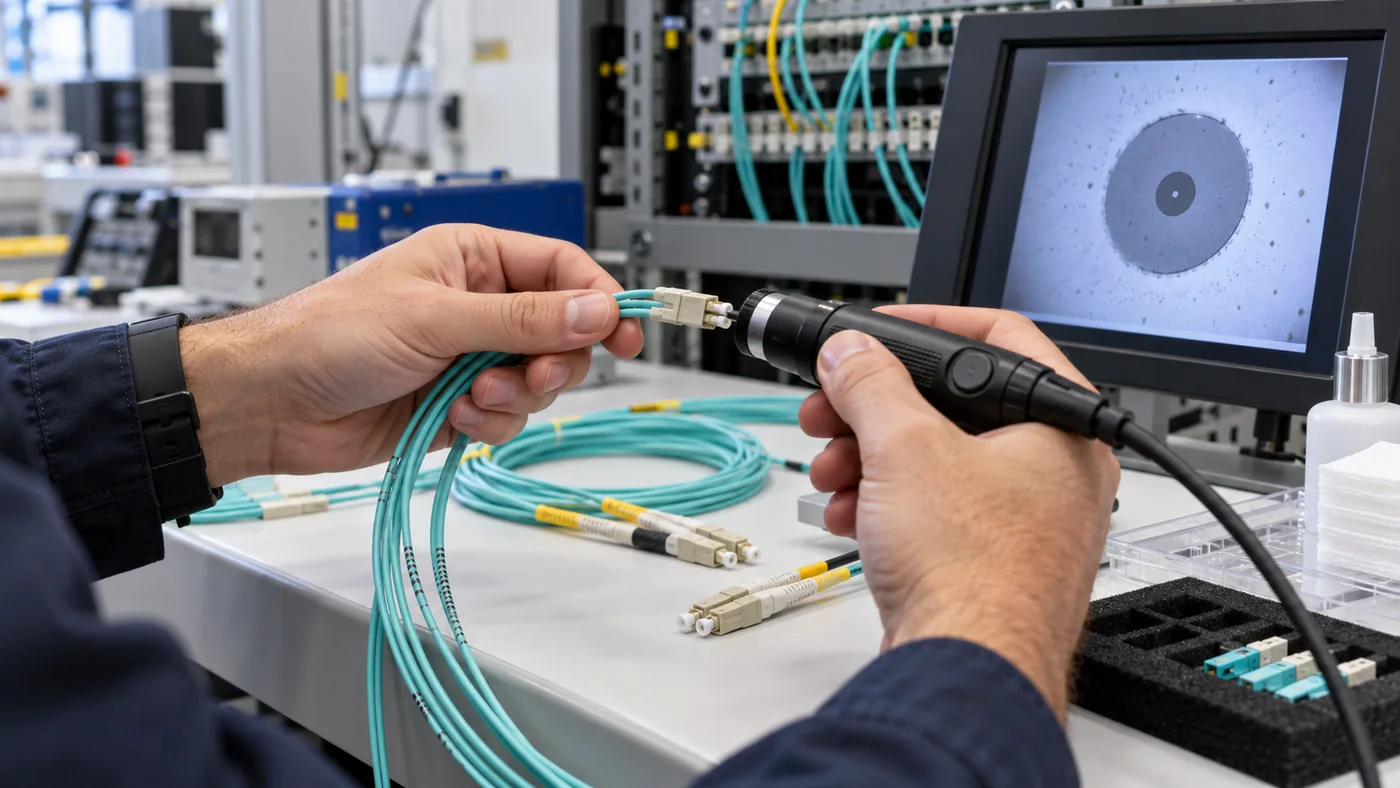
Does core size determine speed or distance?
No. Core diameter alone is not a speed or distance rating. Supported link rates and reaches depend on the fiber category, the optical modules at each end, wavelength, channel design, connector and splice losses, and the applicable system specification. Use the transceiver documentation and link budget for the actual combination you plan to deploy.
This is why headline comparisons that assign one universal distance to 50/125 or 62.5/125 can be misleading. The same diameter can appear in different fiber grades, and the installed link includes more than the cable. Confirm the complete channel design before making a purchasing decision.
Can 50/125 and 62.5/125 fiber be mixed?
Do not assume that mixing the two core sizes is harmless or automatically supported. A mixed link may be technically feasible in some circumstances, but coupling loss and performance can depend on the direction of transmission, launch conditions, the connected equipment, and the rest of the channel. A design that links up is not necessarily compliant with the intended performance target.
For a migration, document every segment and connection, confirm both endpoints and the specified application, then evaluate the optical power budget. Where mixed sections are being considered, have the complete link reviewed and tested with suitable equipment. For a new or upgraded path, using a consistent, specified grade throughout can make validation simpler.
A practical selection checklist
- Identify the installed cable. Record the core size, OM grade, route, connectors, and any intermediate patching.
- Confirm the active equipment. Check transceiver type, supported fiber category, wavelength, and target data rate at both ends.
- Check the required reach. Use the system specification for the complete channel rather than inferring reach from diameter.
- Review the loss budget. Account for the fiber path, connectors, splices, and any proposed mixed-media transitions.
- Match the purchase specification. State the required OM grade and other cable requirements clearly; do not specify only “50/125.”
- Test and document the finished link. Verify that the installed channel meets the project’s requirements before placing it in service.
Which one should you choose?
If you are maintaining an existing network, first match the documented fiber grade and the connected optics. Replacing a legacy 62.5/125 segment with 50/125 without checking the endpoints and link design can create an unexpected compatibility or loss issue.
For a new installation or planned upgrade, select the OM grade based on the required application, transceivers, wavelength, channel reach, and governing specification. Then ensure the cable and all connected components are designed and tested as one link. If you are comparing suppliers, you can also review factors for evaluating fiber-optic manufacturers and contact VIBOFIBER with your documented requirements.

Frequently asked questions
Is 50/125 always better than 62.5/125?
No. The right option depends on the installed plant, application, active equipment, and specified OM grade. For new designs, make the decision from the complete link requirements rather than treating core diameter as a quality ranking.
Is every 50/125 cable OM3 or OM4?
No. The 50/125 size is used across more than one OM grade. Check the jacket identification and datasheet to confirm the exact category.
Can I connect OM1 and OM3 cable together?
A connection may be physically possible, but that does not establish that the resulting channel meets its performance target. Check the optics, application, loss budget, and standards, and validate the complete link before deployment.
What information should I send when requesting a cable quote?
Include the required OM grade, cable construction and environment, route or channel requirements, connector details, quantity, and the applicable project specification. Share only values confirmed by your network design.
Related installation resource
Fiber selection concerns the optical channel. For a separate metalworking task involving equipment or panel openings, see this guide to common drill bit types and their uses.