OS2 vs ITU-T G.652.D Fiber: Differences and Selection Guide
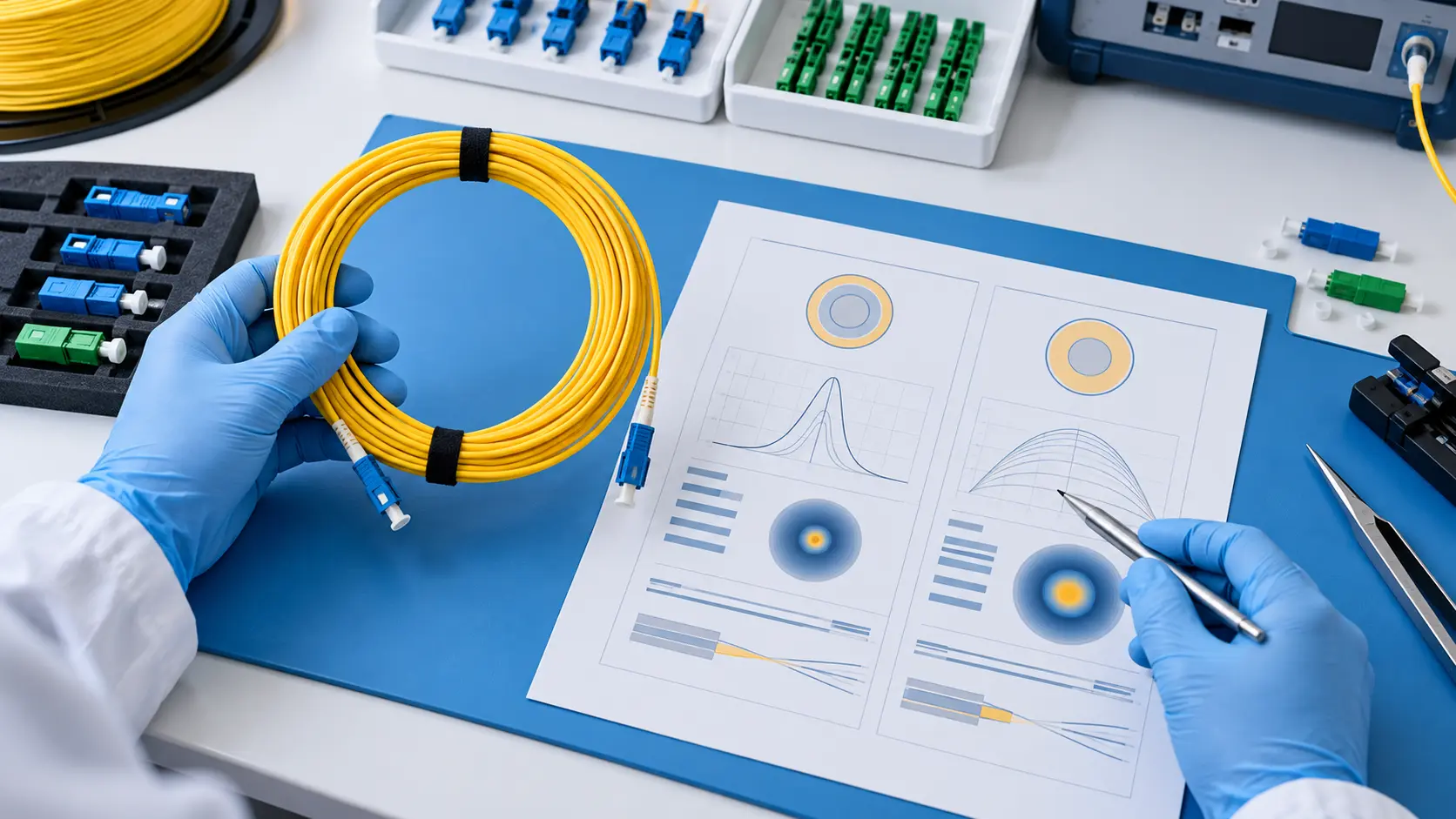
OS2 vs G.652.D fiber is often treated as a simple comparison, but the two names come from different specification frameworks. OS2 is commonly used in structured-cabling discussions to identify a single-mode optical fiber category. ITU-T G.652.D is an ITU-T single-mode fiber recommendation with defined fiber characteristics and application context.
They may appear together in project documentation, cable datasheets, and RFQs, but they should not be treated as automatically identical terms. The correct selection requires review of the exact cable construction, fiber designation, applicable standards, installation environment, active optical interface, connector path, and complete channel requirements.
For FTTH, telecom, campus, inter-building, and data-center projects, begin with the required application and approved network design, then specify the fiber and cable assembly from verified documentation.
OS2 and G.652.D are not the same type of designation. They may appear together in some cable documentation, but those labels alone do not prove identical fiber construction, cable design, installation suitability, or complete channel performance. Confirm the exact cable and fiber documentation before approving a project specification.
Quick Answer: OS2 vs G.652.D Fiber
OS2 and G.652.D are both associated with single-mode fiber planning, but they describe different aspects of an infrastructure requirement.
- OS2 is commonly used as a structured-cabling designation for single-mode optical fiber.
- ITU-T G.652.D is an ITU-T recommendation category for single-mode fiber with specified characteristics relevant to optical transmission applications.
- A cable may use both terms where its documented construction and fiber type support those designations.
- Neither label alone defines cable construction, connector arrangement, installation suitability, active interface, or complete channel performance.
The final specification should identify the required fiber designation, applicable standard, cable construction, fiber count, installation environment, connector or splice plan, active interface, and acceptance requirements.
What Is OS2 Single-Mode Fiber?
OS2 is commonly used to identify a single-mode fiber category for structured optical cabling. It is often referenced in data-center, campus, enterprise, telecom, and inter-building fiber-infrastructure planning.
OS2 alone does not confirm a supported active interface, wavelength plan, installed-path condition, connector arrangement, cable construction, or end-to-end channel performance. Verify these details using the exact cable and component documentation.
When an RFQ specifies OS2, it should also state whether the requirement applies to an indoor cable, outdoor cable, trunk assembly, patch cord, pigtail, pre-terminated system, or another approved cable format.
What Is ITU-T G.652.D Fiber?
ITU-T G.652 is a family of recommendations for single-mode optical fiber and cable characteristics. G.652.D is commonly referenced in telecom and optical-distribution planning where the fiber type must support the approved wavelength and transmission requirements of the network design.
G.652.D should be read as a fiber-performance and application-related designation, not as a complete cable or connector specification. It does not identify the cable jacket, fiber count, strength member, installation method, connector type, splice method, or environmental suitability by itself.
OS2 vs G.652.D Fiber Comparison
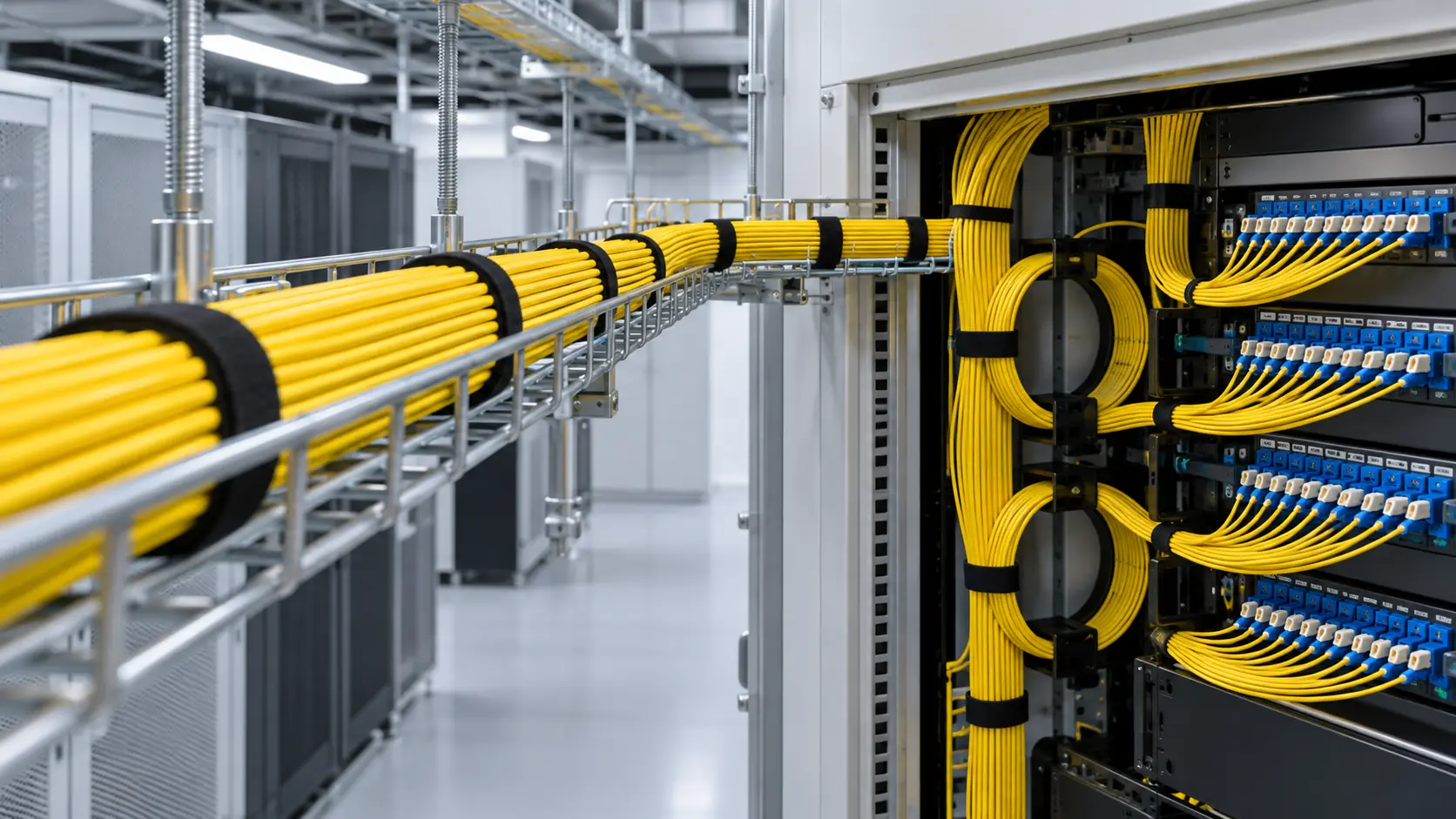
| Selection area | OS2 | ITU-T G.652.D | What to verify |
|---|---|---|---|
| Primary context | Structured-cabling and single-mode infrastructure designation | ITU-T single-mode fiber recommendation category | The specification framework required by the project |
| Does not define alone | Cable construction, connector type, environment, active interface, full channel | Cable construction, connector type, installation method, full channel | Exact product documents and approved network design |
| Typical planning use | Data center, campus, enterprise and structured cabling | Telecom, FTTH/PON, outside plant and transmission planning | Actual application, route and customer requirements |
| Procurement approach | Specify OS2 plus cable and channel details | Specify G.652.D plus cable and channel details | Whether both designations are required |
A project should request and review the applicable cable and fiber documentation before approving a final bill of materials.
How OS2 and G.652.D Can Appear in the Same Project
In some projects, the structured-cabling requirement and the fiber-performance requirement are both relevant. A project may require single-mode infrastructure described as OS2 while also requiring the underlying fiber documentation to align with an applicable ITU-T designation. One label does not replace the other.
- Required single-mode fiber designation and applicable ITU-T requirement
- Cable type, fiber count, construction, and intended installation location
- Connector, splice, panel, and passive-path arrangement
- Active optical-interface requirement at both ends
- Required testing, documentation, and acceptance process
OS1 vs OS2: Why the Difference Matters
OS1 and OS2 are both single-mode designations used in structured-cabling discussions. They should not be selected from name similarity alone.
Do not derive cable construction or installation environment from an OS1 or OS2 label alone. Confirm the exact cable design, fiber category, jacket and fire-rating requirements, mechanical requirements, connectorization method, and approved application before selection.
When updating an existing facility, do not assume that an installed OS1 or OS2 route supports every future active interface. Verify the actual cable records, route condition, patching architecture, connector path, and complete channel budget.
G.652.D vs G.657: Bend Performance and Installation Planning
G.652.D and G.657 are both single-mode fiber designations used in different planning contexts. G.657 is commonly discussed where bend performance is an important consideration in the approved cable and installation design.
Compatibility must be verified from the exact fiber category, manufacturer documentation, splice and connector requirements, applicable operator specifications, and approved network design. Do not assume universal interchangeability between G.652.D and G.657 designations.
A fiber designation should not be selected only because a route includes tight spaces or multiple turns. The cable construction, pathway, minimum bend requirements, installation method, termination plan, and equipment requirements must all be reviewed together.
How to Choose Fiber for FTTH, Telecom, and Data Center Links
FTTH and PON Networks
Many FTTH and PON optical-distribution-network designs use single-mode fiber. Final fiber, connector, splitter, wavelength-plan, and deployment choices depend on the applicable operator, equipment, and approved network design.
Telecom and Outside-Plant Routes
Review the actual route, cable environment, fiber count, pathway protection, closures, splice locations, passive topology, and future expansion plan. Do not select a cable from the fiber designation alone.
Data Center and Campus Links
Start with the host equipment, approved active optical interface, route length, connector path, panel architecture, and expected application lifecycle. The final channel includes the full cable, connector, adapter, panel, cassette, splice, and passive-component path.
Illustrative RFQ Scenario
This is a hypothetical example, not a VIBOFIBER case study or tested configuration.
For an inter-building connection, a project team identifies the approved optical interfaces, cable pathway, available duct or tray, and future fiber requirements. Instead of requesting only “OS2 cable” or “G.652.D fiber,” it specifies the fiber designation, applicable standard, cable environment, fiber count, route length, termination approach, connector or splice plan, passive path, test requirements, and documentation requirements.
OS2 vs G.652.D Fiber RFQ Checklist
- Required fiber designation and applicable standard reference
- Application and exact installation environment
- Fiber count, spare capacity, cable construction, and pathway protection
- Connector, pigtail, panel, closure, and splice arrangement
- Active optical interface and wavelength plan
- Complete channel and optical-budget inputs
- Bend management, labeling, testing, acceptance, and as-built documentation
Common Specification Mistakes
- Treating OS2 and G.652.D as automatically identical
- Specifying only a fiber type without cable, environment, termination, and channel requirements
- Ignoring the active optical interface and wavelength plan
- Evaluating route distance without connectors, panels, splices, passive components, and margin
- Assuming one fiber designation defines bend practice
- Relying on labels without route records or suitable test information

Safety Notice
Fiber-optic connectivity work should be performed by trained personnel following site procedures, equipment documentation, and local regulations.
- Never look into active fiber connectors, cable ends, transceivers, or optical ports.
- Verify link status before handling optical interfaces.
- Inspect the end face before connection; clean through approved procedures, then inspect again.
- Follow applicable bend-radius, pulling-force, pathway, grounding, fire-safety, and labeling requirements.
- Use ESD precautions around active modules and network equipment.
- Handle and dispose of fiber shards using approved site procedures.
- Validate the complete channel before placing critical links into service.
This article is general educational guidance. Final selection, installation, testing, and deployment must be verified against approved component specifications, equipment documentation, complete channel design, and site requirements.
Frequently Asked Questions
Is OS2 the Same as G.652.D Fiber?
Not automatically. They are used in different specification contexts. A cable may reference both where its documented construction and fiber type support those designations, but the exact project requirement must be confirmed.
Can I Specify Only OS2 for an FTTH or Telecom RFQ?
No. Include fiber designation, applicable standard, cable construction, fiber count, installation environment, route type, connector or splice plan, active interface, and acceptance requirements.
Is G.657 Better Than G.652.D?
Neither is universally better. The correct selection depends on the application, cable environment, fiber path, installation method, active interface, and network requirements.
Does OS2 Fiber Guarantee a Specific Reach?
No. Actual reach depends on the active optical interface, wavelength plan, complete channel loss, connectors, splices, passive components, and engineering margin.
Need Help Organizing a Single-Mode Fiber Requirement?
Prepare the application, required fiber designation, cable environment, route information, fiber count, connector or splice plan, active interface, and acceptance requirements. VIBOFIBER can provide fiber optic cables and connectivity solutions while current product and project information are confirmed for the intended deployment. Contact VIBOFIBER to discuss a requirements-based RFQ.