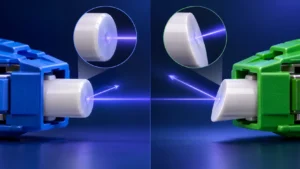
An optical add-drop multiplexer (OADM) is a passive wavelength-management device used in wavelength-division multiplexing (WDM) networks. It lets a selected optical wavelength be added to, or removed from, a fiber route while other wavelengths continue along the same route.
In practical network planning, an OADM helps turn a point-to-point WDM path into a route with intermediate access points. Instead of terminating every wavelength at every location, planners can pass most traffic through and interact only with the wavelength channels required at a specific site.
This guide explains the role of an OADM, the meaning of its ports, the difference between OADMs and Mux/Demux devices, and the questions to ask before selecting a WDM configuration.
What Is an OADM?
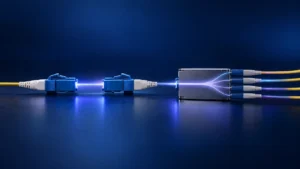
OADM stands for optical add-drop multiplexer. In a WDM system, multiple optical signals with different wavelengths can travel over one fiber path. An OADM uses wavelength-selective optical components to separate a chosen channel from the line, add a new channel to the line, or do both depending on the network design.
The device itself is passive: it does not convert optical traffic into electrical traffic or make routing decisions like an Ethernet switch. Its function is to manage wavelength paths. The complete system still depends on the applicable transceivers, fiber type, channel plan, connector interfaces, loss budget, and approved network design. For broader planning contexts, review VIBOFIBER’s fiber optic solutions.
How an Optical Add-Drop Multiplexer Works
An OADM is commonly installed at an intermediate location on a WDM fiber route. It creates three basic traffic paths:
- Express path: wavelengths that do not need to terminate at the site continue through the OADM.
- Drop path: the selected wavelength is separated from the line and delivered to local equipment.
- Add path: a local optical signal on the planned wavelength is introduced onto the line fiber.
For example, a network may carry several WDM channels between two end locations, with one location in the middle requiring access to a single service. An appropriately designed OADM can drop the required channel at that location while allowing the other planned channels to pass through. The exact channel plan and physical arrangement must be confirmed for the specific system.
Add Port, Drop Port and Express Port Explained
Understanding port roles is essential before ordering WDM connectivity components.
Add Port
The add port is used to introduce a local optical wavelength into the WDM line. The optical interface and wavelength allocation must match the approved channel plan. A physically compatible connector alone does not establish optical compatibility.
Drop Port
The drop port carries the selected wavelength from the WDM line toward the local device or downstream connectivity. It is used when traffic on a particular channel must be accessed at that site.
Express Port
The express port carries the wavelengths that are not selected for local add or drop action. This supports through traffic along the fiber route. Depending on the OADM design and network topology, express connections can be planned for one or more directions.
Monitor Port
Some WDM designs may include an optical monitor function or port. Whether a monitor port is needed, and how it should be used, depends on the approved operational process and the equipment documentation. It should not be treated as a substitute for a validated link design or proper test procedure.
OADM vs Mux/Demux: Key Differences
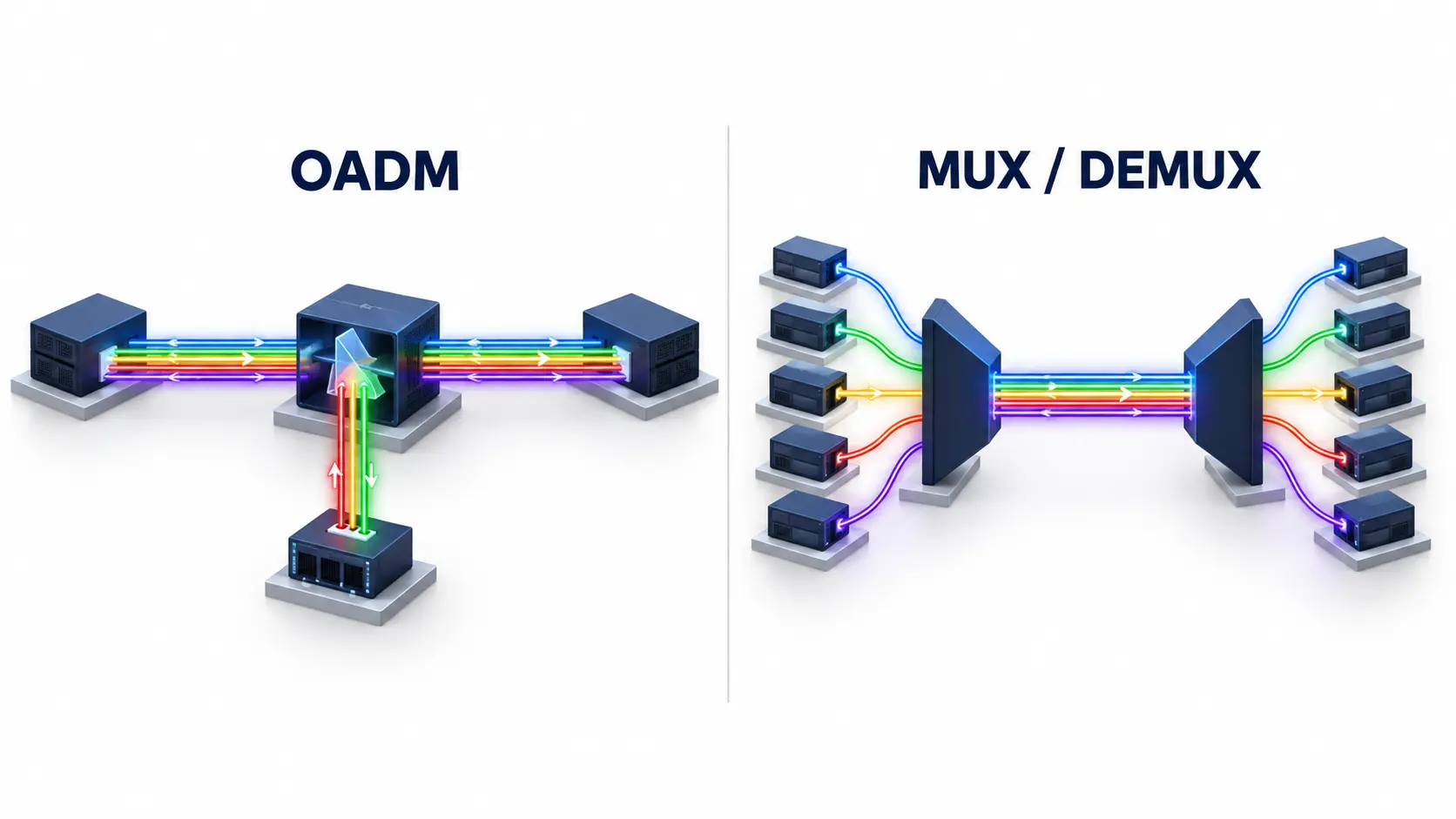
An OADM and a Mux/Demux both support WDM networks, but they address different locations in the topology.
| Function | OADM | Mux/Demux |
|---|---|---|
| Typical location | Intermediate site on a WDM route | End point of a WDM route |
| Main role | Add or drop selected wavelengths while other channels pass through | Combine multiple local wavelengths onto a line or separate them at an end location |
| Through traffic | Designed to support planned express wavelengths | Typically terminates the planned WDM channel set at that location |
| Planning focus | Local access plus pass-through channel continuity | End-to-end wavelength aggregation or separation |
In a simple WDM route, Mux/Demux units may be used at the end locations and an OADM may be used at an intermediate location. The right topology depends on the number of sites, required services, fiber availability, protection approach, and the documented optical channel plan.
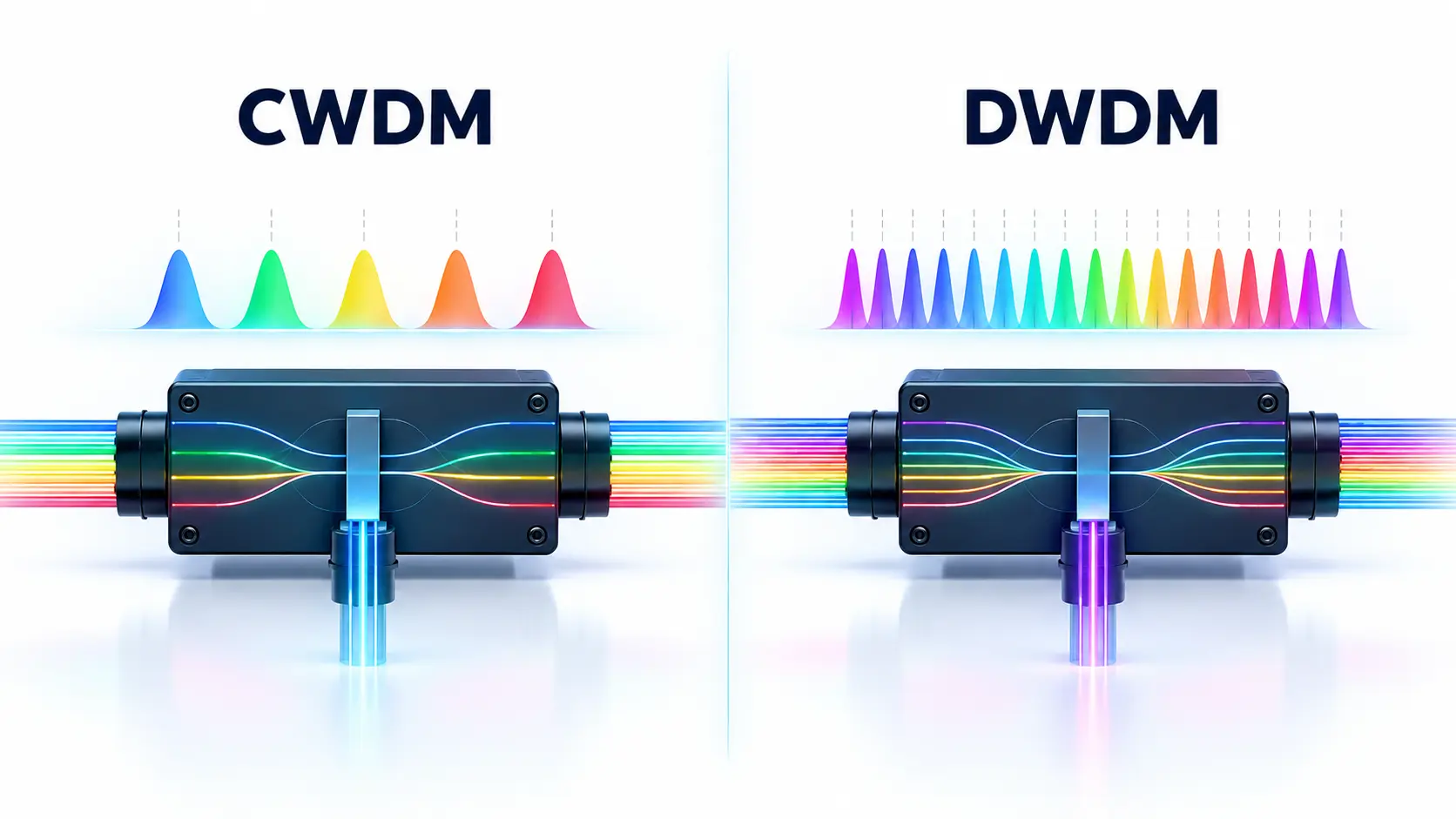
CWDM OADM vs DWDM OADM
Both CWDM and DWDM systems use wavelength-division multiplexing, but their channel plans, components, optics, and engineering requirements differ.
CWDM OADM
A CWDM OADM is generally considered for WDM applications using a coarse wavelength plan. It can be used where the selected system design, channel count, optical interfaces, and link budget are appropriate for CWDM. Component selection should be based on the actual channel allocation rather than a generic assumption about distance or capacity.
DWDM OADM
A DWDM OADM is designed for systems using a denser wavelength plan. DWDM projects often require closer coordination between the channel plan, transceiver selection, line characteristics, and operational process. Do not assume that a CWDM OADM and a DWDM OADM are interchangeable; confirm every interface and wavelength assignment against the approved design and relevant product documentation.
Common OADM Network Applications
OADMs can be considered when a network needs intermediate wavelength access without terminating all channels at every site. Common planning scenarios include:
- Multi-site enterprise or campus fiber routes
- Metro and access-network segments with intermediate locations
- Data center or carrier-neutral interconnection routes
- WDM paths where one site needs local service access while other planned wavelengths continue onward
These scenarios describe topology concepts, not a performance guarantee. The final configuration must account for fiber routing, available strands, splice and connector count, the applicable loss budget, optics, installation environment, and future expansion requirements.
How to Choose an OADM for Your Optical Network
Start with the channel plan and the topology rather than a product label. The following questions help create a clearer RFQ or bill of materials for fiber optic products and components.
1. Which wavelengths must be added, dropped or passed through?
List the required local channels and the channels that must remain on the express path. This is the foundation for selecting a compatible OADM configuration.
2. Is the network based on CWDM or DWDM?
The OADM must align with the approved WDM technology and channel plan. Confirm the optical interfaces and selected active equipment before finalizing any passive component configuration.
3. What is the physical topology?
Document the end locations, intermediate locations, fiber directions, available fibers, and required local access points. A clear topology diagram helps identify whether an OADM, Mux/Demux, or another WDM arrangement is appropriate.
4. What is the complete optical channel budget?
Account for the full installed path: cable attenuation, splices, connectors, patching, WDM components, and equipment specifications. Published component information must be evaluated within the complete channel budget, not in isolation.
5. How will the system be labeled, tested and maintained?
Wavelength labels, port identification, patching records, cleaning procedures, and acceptance testing all affect operational reliability. Plan these items before installation, especially where multiple sites or teams will work on the same optical route.
Common OADM Planning Mistakes
Treating ports with the same connector as interchangeable
Connector type does not determine wavelength function. Add, drop, and express ports serve different purposes in the planned optical path. Follow the port labeling and approved design documentation.
Selecting passive components before confirming the optics
The WDM channel plan must align with the optical equipment at both ends of each service. Confirm the planned wavelengths and applicable interface requirements before selecting the passive configuration.
Ignoring total channel loss
Every connection, splice, fiber segment, and passive component contributes to the optical path. A design should be evaluated as an end-to-end channel, not as a collection of individually compatible parts.
Leaving documentation until after installation
Unclear wavelength labels and port records make troubleshooting harder. Maintain accurate routing, labeling, and test documentation throughout the project.
Safety Notice
This article provides general planning information and does not replace approved network designs, equipment documentation, local codes, site procedures, or qualified technical review. Fiber optic work should be performed by trained personnel following the applicable safety rules.
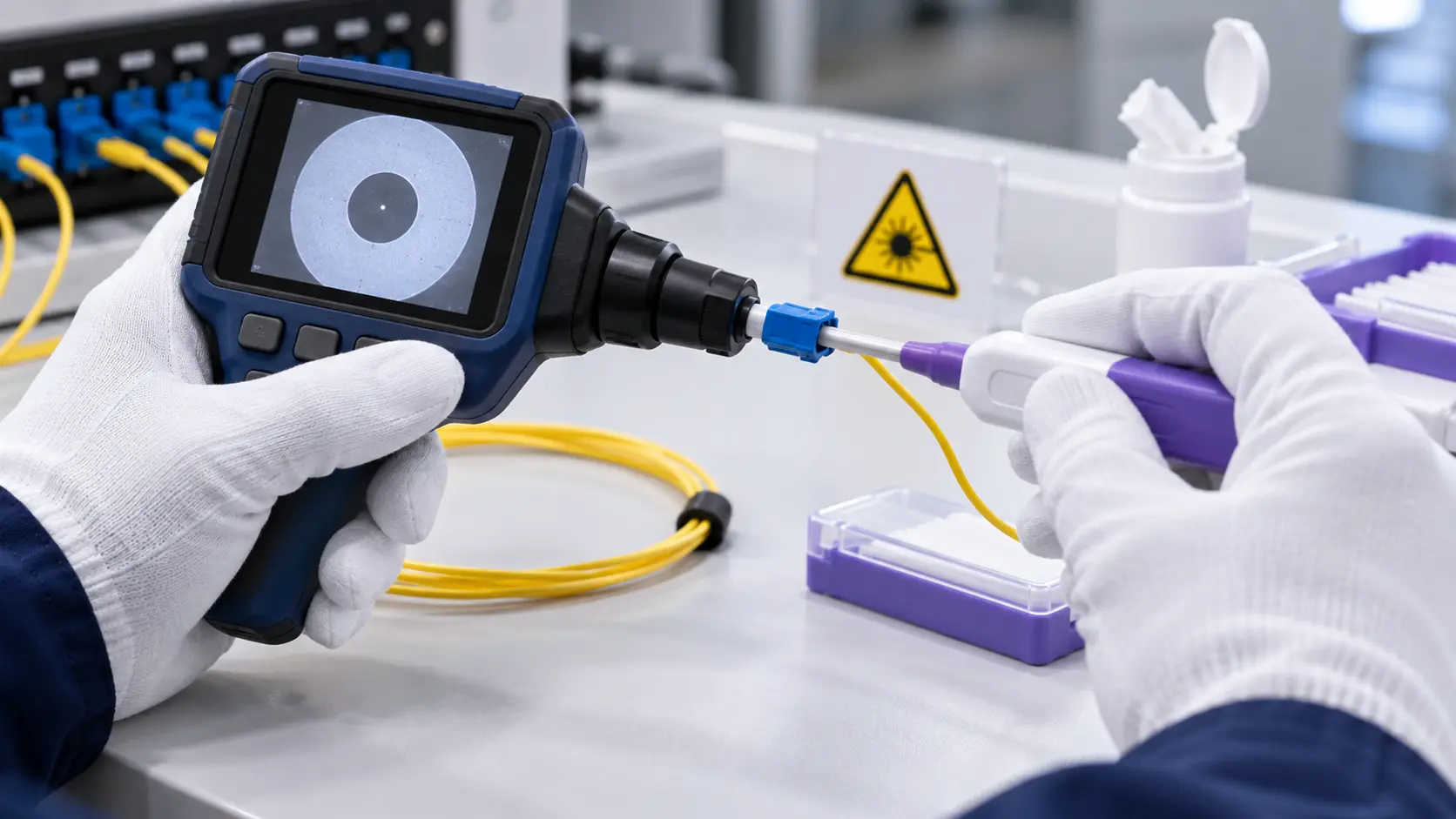
Never look directly into a fiber endface, connector, or active optical port, as invisible laser radiation may be present. Verify the link status before inspection, cleaning, or testing. Use appropriate fiber inspection and cleaning tools, follow ESD and equipment procedures, manage fiber shards safely, and observe specified bend radius, pulling tension, pathway protection, fire-rating, grounding/bonding, and environmental requirements. Confirm the final configuration against the approved project documents, applicable standards, and local building and fire requirements.
Frequently Asked Questions
Is an OADM the same as a Mux/Demux?
No. Both are WDM components, but an OADM is typically used to add or drop selected wavelengths at an intermediate location while planned express channels continue. A Mux/Demux is commonly used to combine or separate a channel set at an end location.
Can an OADM be used with any transceiver?
No. The optical equipment, WDM technology, planned wavelengths, interfaces, and channel budget must be compatible with the approved network design.
Does an OADM increase network capacity by itself?
An OADM manages selected wavelength paths. The available services and capacity depend on the complete system design, active equipment, fiber plant, channel plan, and optical budget.
What information should be included in an OADM inquiry?
Include the WDM technology, planned wavelengths, required add/drop/express functions, fiber direction or topology, connector interfaces, mounting preference, installation environment, and the approved link or channel requirements.
Discuss WDM Component Options for Your Project
VIBOFIBER can discuss passive WDM component options based on confirmed project requirements. Share the planned channel allocation, topology, fiber path, interfaces, and installation requirements through our contact page so the relevant options can be evaluated.